
Arborist Consulting & Permits
Tree Health Assessments and Disease Diagnosis in Greater Victoria
A tree health assessment diagnoses why a tree is declining by reviewing abiotic causes such as soil, water, root damage and site changes, and biotic causes such as pests and disease. Oakstead Tree & Property Care provides tree health assessments in Saanich, Victoria and the Cowichan Valley, identifies the root cause, and recommends less invasive Integrated Pest Management treatments first.
In plain words
A tree health assessment finds out why a tree is unwell. We look at soil, water, roots, pests and disease. Then we suggest the gentlest treatments first.
If you’re unsure about why your trees are looking unwell, we’re here to help with professional, science-based solutions for Tree Health and Maintenance. Often, when a tree is afflicted by pests or disease, the underlying issue is related to environmental stress or other factors that weaken the tree, with pests acting as secondary agents. At Oakstead, we take pride in the “detective work” involved in diagnosing tree health issues. Jon is dedicated to identifying the root cause of the problem and guarantees his best efforts to find a solution. Our approach includes a systematic review of abiotic factors, such as Soil Health & Root Care, and biotic factors, like pests and diseases. When necessary, we can also conduct laboratory analysis to support our findings. Whether the issue is immediately apparent or requires deeper investigation, we deliver accurate Tree Disease Diagnosis and tailored recommendations for treatment.
If treatment is needed, we incorporate the principles of Integrated Pest Management (IPM) into our approach. This means prioritizing less invasive, environmentally friendly methods, such as improving Soil Health, applying Fertilization & Soil Amendments, or adjusting tree care practices like Tree Pruning & Trimming. These holistic solutions are often sufficient to address most pest and disease issues. However, if further action is required, Jon, as a Licensed Pesticide Applicator, can apply targeted treatments to manage or eliminate the problem effectively. In addition to diagnosing diseases and pests, we can recommend ongoing Vegetation Management to maintain tree health and resilience over time, with hands-on work referred to vetted local partners. At Oakstead, our goal is to deliver science-based care that enhances the vitality and longevity of your trees, ensuring they remain a valuable part of your landscape.
Common Issues
Here are some common issues trees face, with a short assessment of each:
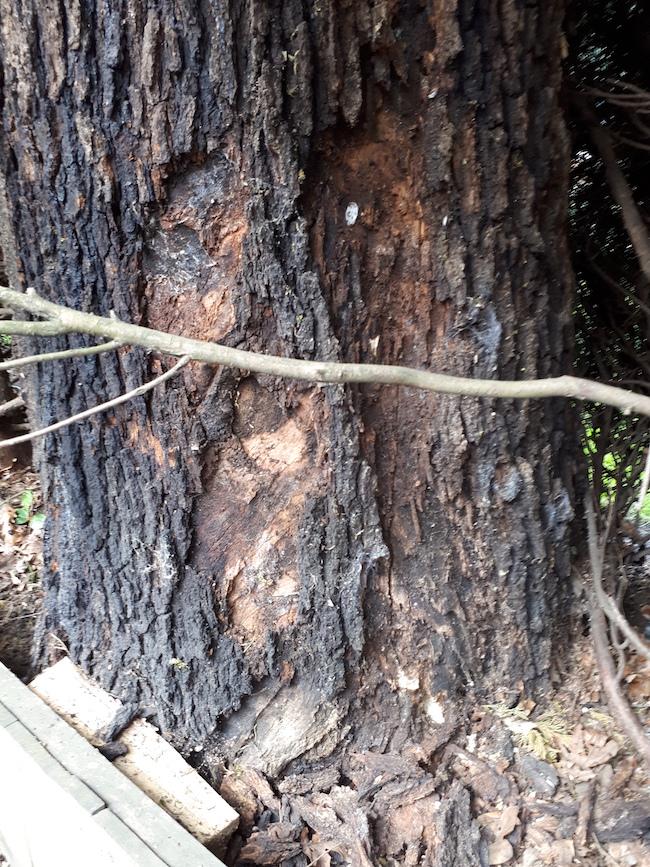
- Peeling or falling bark: when tree bark falls off it’s not a good sign, period. It may be as straightforward as an insect infestation or an environmental issue. It may be as serious as the tree dying. We’d need to do a more thorough investigation into the area.
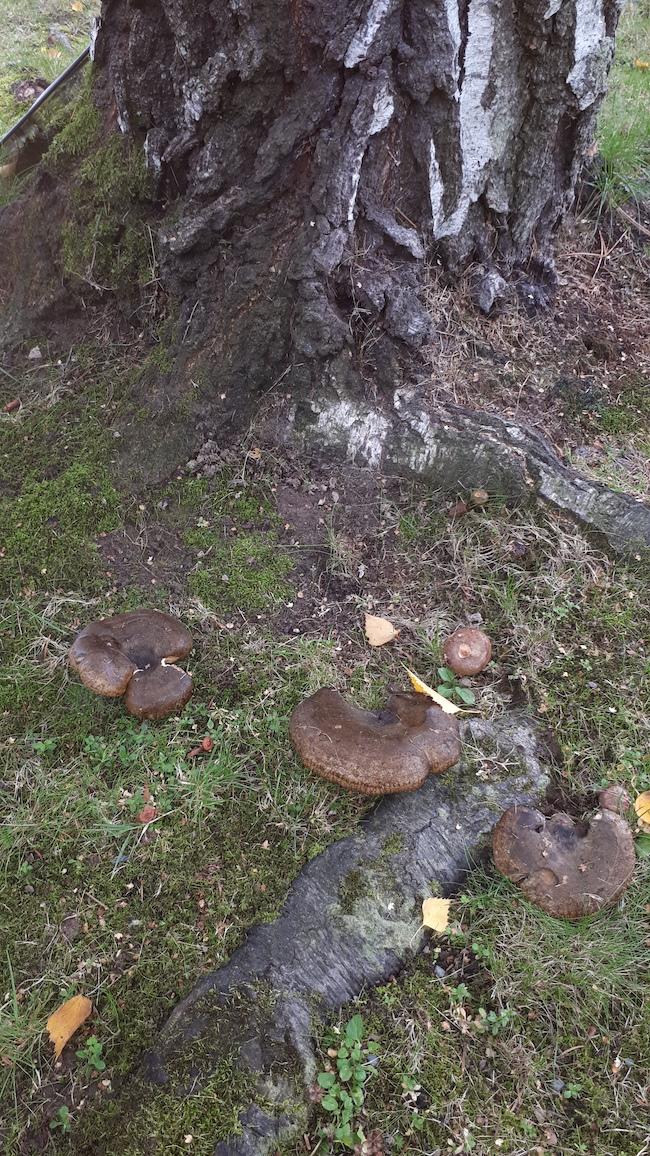
- Mushrooms at the base of the tree: mushrooms and other fungi sprouting from the base of a tree often indicate rot. We’ll conduct a thorough investigation into the source of the potential rot. If we think the tree can be saved, which it often can be, we’ll recommend treatment and refer any removal of decayed wood to vetted local partners.
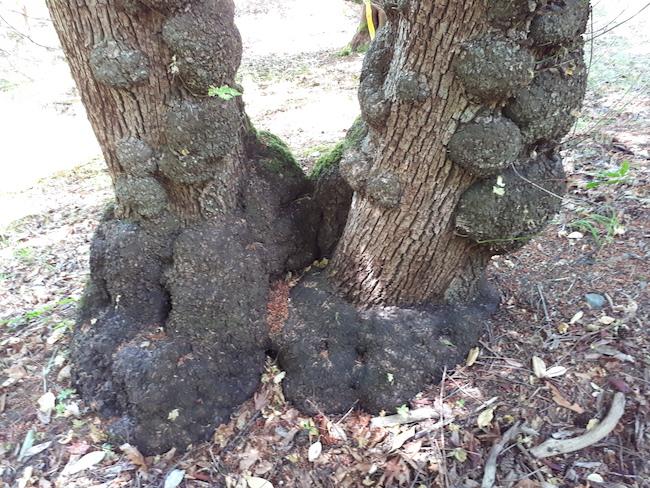
- Lumpy growths on the trunk (burls): these growths are called tree burls, and are caused by either stress or insect disruption. These can be dangerous as they may weaken the structure of the tree and eventually topple it. Removing the burl isn’t often a good idea because it becomes part of the integrity of the tree. We may recommend reducing the canopy for more stability, with that pruning referred to vetted local partners.
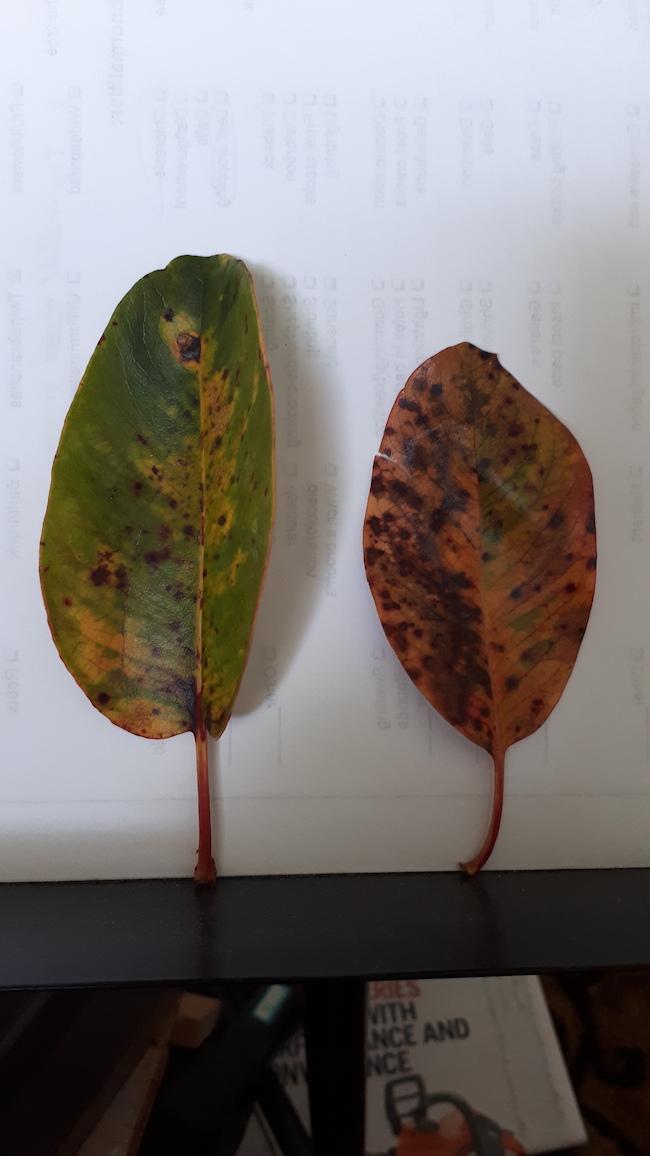
- Leaf spot: leaf spotting generally isn’t a meaningful indicator of tree health, but it can be off-putting. Often it’s caused by fungal spores in the area that attach to the leaves and try to grow. These can often be easily treated by maintaining the area nearby.
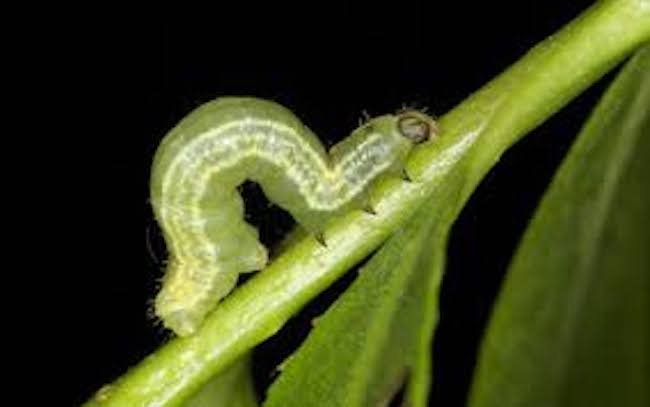
- Insects such as winter moth: there are countless insects that can affect a tree’s health. Winter moths appear mainly between November and February. They cause defoliation, which leads to the death of the tree. The infestation can be treated if caught early enough.
Tree Health Assessments: frequently asked questions
Why is my tree dying?
Decline often starts with environmental stress such as compacted or disturbed soil, drought, root damage or site changes, and pests or diseases then act as secondary agents. A health assessment identifies the underlying cause so treatment actually works.
Do you use pesticides on trees?
Only when needed. Oakstead follows Integrated Pest Management, favouring soil health improvements, fertilization and soil amendments, and better pruning practices, which are often enough to address most problems. If further action is required, Jon is a Licensed Pesticide Applicator and can apply targeted treatments.
What do mushrooms at the base of my tree mean?
Mushrooms or other fungi growing at the base of a tree often indicate rot. An arborist should investigate the source and extent of the decay. Trees can often be saved by treating the issue and removing the rotten area, which Oakstead refers to vetted local partners, but some may need a risk assessment.
Can you test a sick tree in a lab?
Yes, when needed. Oakstead's diagnosis starts with a systematic on-site review of soil, roots, pests and disease, and laboratory analysis can be arranged to support the findings when the cause is not immediately apparent.
Ready to talk to a Certified Arborist?
We respond to every request. Serving the Saanich Peninsula, Greater Victoria and the Cowichan Valley.