
Arborist Consulting & Permits
TRAQ Tree Risk Assessments in Victoria and Saanich
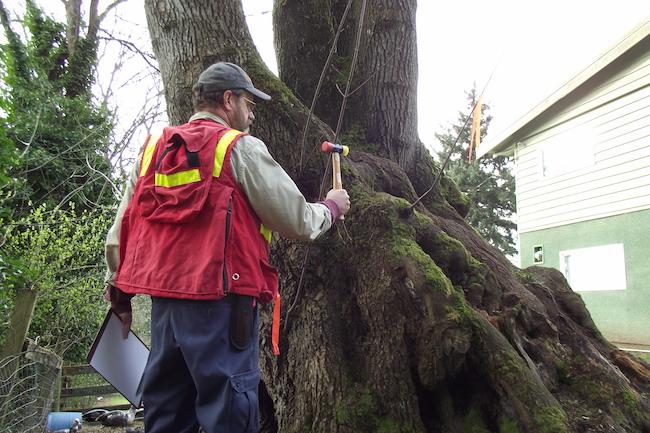
A tree risk assessment evaluates how likely a tree, or part of it, is to fail and what the consequences would be. Oakstead Tree & Property Care performs TRAQ (Tree Risk Assessment Qualification) tree risk assessments in Victoria, Saanich and the Cowichan Valley for homes, stratas, businesses and public spaces, using diagnostic tools such as increment bores and a Resistograph, with written mitigation recommendations.
In plain words
A tree risk assessment asks how likely a tree is to fail. It also asks what harm that could cause. Oakstead uses special tools to look for hidden rot. You get written advice on what to do next.
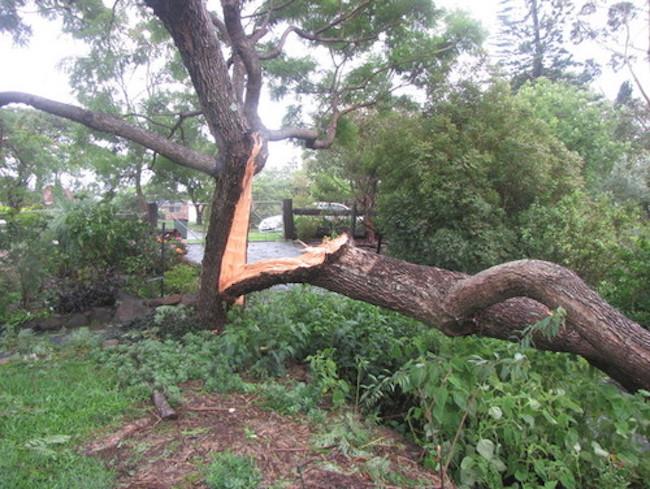
Oakstead specializes in Tree Risk Assessments (TRAQ Certified), providing professional evaluations that identify potential hazards and ensure the safety of trees in residential, commercial, and public spaces. Using standardized and recognized methods developed by the International Society of Arboriculture (ISA) and the Province of British Columbia, we deliver thorough and reliable assessments tailored to meet regulatory requirements and support responsible tree management. Our Tree Risk Assessments play a critical role in preventing accidents, mitigating liability, and maintaining the health of trees while preserving their value in the urban landscape.
When an assessment is required
Before any Protected Trees can be removed, replaced, or impacted, most municipalities require a Tree Cutting Permit or a Tree Management Plan, supported by a formal Tree Risk Assessment conducted by an ISA Certified Arborist or a professional with provincial certification. At Oakstead, we go beyond basic assessments by utilizing advanced diagnostic tools, including Increment Bores and the Resistograph Wood Density Probe, to assess internal tree conditions with precision. These tools allow us to identify hidden defects, decay, and structural weaknesses, ensuring that every assessment is both accurate and actionable.
Related services and diagnostic tools
We also provide a range of related services, including Arboricultural Impact Assessments, Tree Health Monitoring, and Forest Health Assessments, to deliver a complete picture of a tree’s condition and its role in the environment. Our specialized diagnostic tools include:
- Air Spade: This tool allows for non-invasive excavation around tree root zones, ensuring roots remain undisturbed while enabling below-ground root inspections or the installation of service lines in the root zones of Protected Trees.
- Increment Bore: Used to extract a core of wood from the tree trunk, this tool reveals growth rings and provides insight into defects, decay, or historical growth patterns.
- Resistograph (Wood Density Diagnostic Instrument): This advanced instrument uses a probe to assess wood density, cracks, cavities, and decay, providing a detailed graph of internal tree conditions and creating a “map” of trunk or branch structure.
- Sonic tomography: Used in advanced (TRAQ Level 3) assessments, it sends sound between small pins placed around the trunk to build a cross-section picture of where decay is likely to be. Our Sonic Tomography page explains how it works.
Your arborist report
Upon completing the assessment, we deliver a comprehensive Arborist Report that outlines findings, recommendations, and any required documentation for a Tree Removal Permit. These reports are prepared with an emphasis on Tree Risk Mitigation, ensuring that all recommendations align with local regulations and best practices. Oakstead’s commitment to excellence in Tree Risk Assessments provides our clients with the peace of mind that their trees are being managed safely, responsibly, and in full compliance with municipal bylaws.
Tree Risk Assessments prices
- Tree risk assessment, TRAQ (Tree Risk Assessment Qualification) Level 2 (basic)
- From $495 for the first tree
- Add $150 for each extra tree.
Prices in Canadian dollars, before GST (Goods and Services Tax), updated . See all arborist service prices
Tree Risk Assessments: frequently asked questions
What is a TRAQ tree risk assessment?
TRAQ is the International Society of Arboriculture's Tree Risk Assessment Qualification. A TRAQ assessment uses a standardized method to rate the likelihood of failure, likelihood of impact and consequences, then recommends mitigation such as pruning, cabling or removal.
When should I get a tree risk assessment?
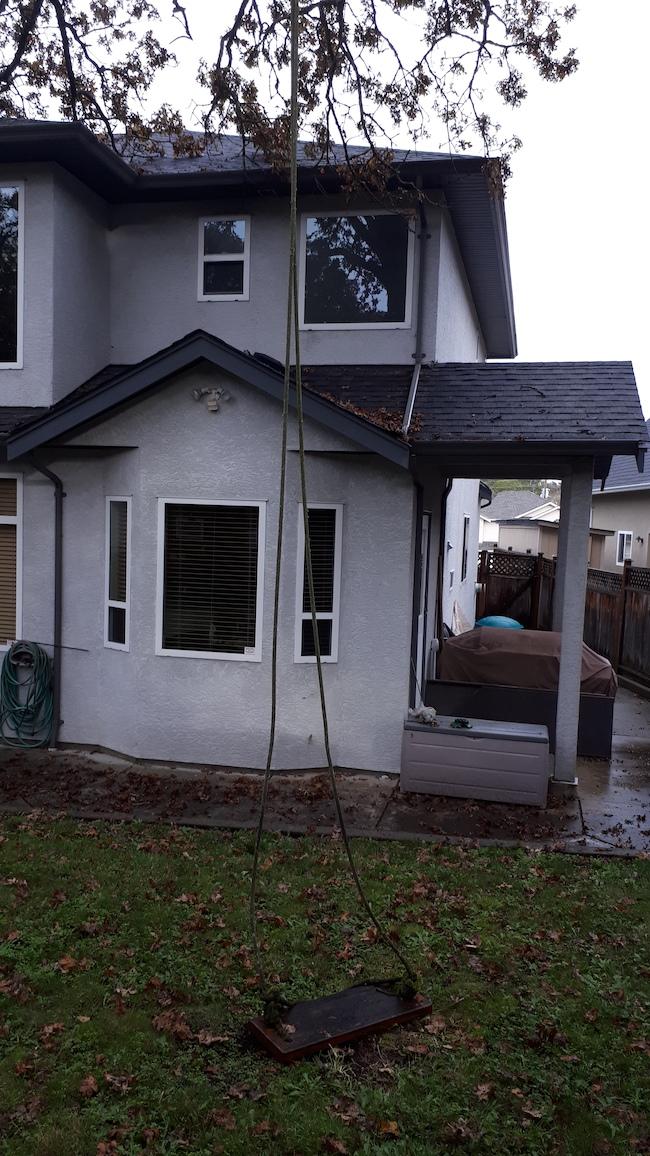
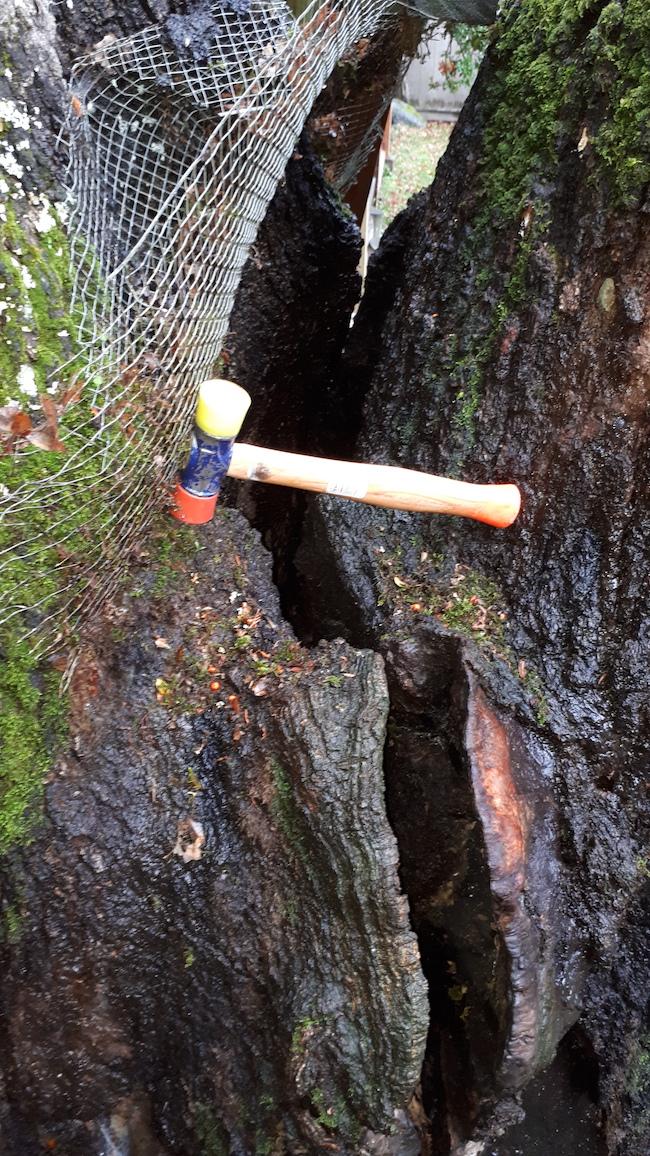
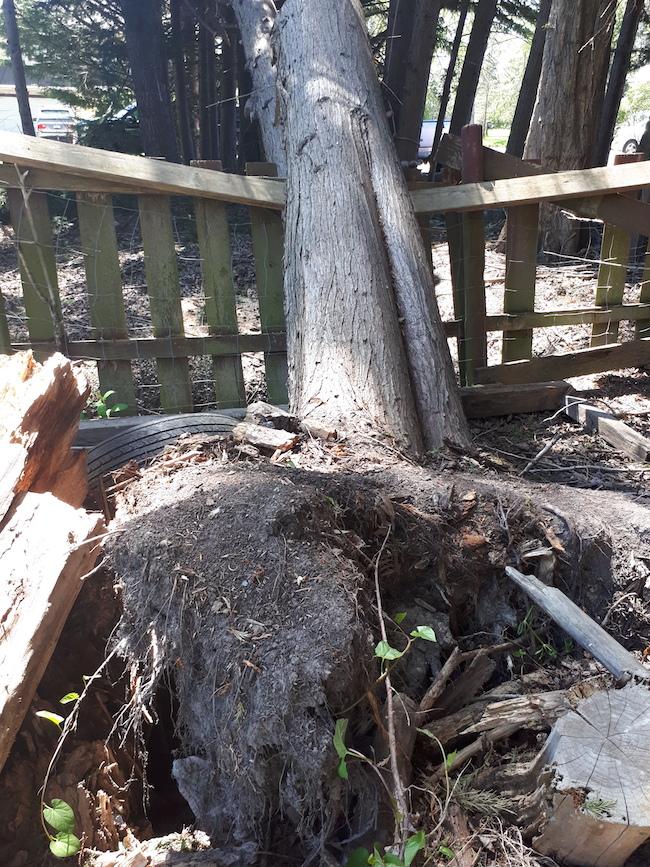
Get one if a tree has dead limbs, cracks, fungal growth, a lean that has changed, or root damage from construction, or if it overhangs a house, driveway, play area or public space. An assessment tells you whether the tree needs work or can safely stay.
Will I get a written report?
Yes. Oakstead provides a written arborist report with findings, a risk rating and mitigation options. Reports are suitable for stratas, insurers and municipal tree removal permit applications, and recommendations align with local regulations and best practices.
How do arborists check for hidden decay inside a tree?
Oakstead uses an increment bore to extract a small core showing growth rings and decay, and a Resistograph probe that maps wood density, cracks and cavities inside the trunk or branches. An Air Spade can expose roots for inspection without damaging them.
Ready to talk to a Certified Arborist?
We respond to every request. Serving the Saanich Peninsula, Greater Victoria and the Cowichan Valley.