
Arborist Consulting & Permits
Tree Cabling and Bracing Systems in Victoria and Saanich
Tree cabling and bracing is the installation of support systems that strengthen weak, damaged or awkwardly growing trees so they do not need to be removed. Oakstead Tree & Property Care assesses trees in Victoria, Saanich and the Saanich Peninsula, specifies dynamic systems using nylon straps that do not damage the tree or static systems using bolted cables or rods, and refers the installation to vetted local partners.
In plain words
Cabling and bracing adds support to a weak or damaged tree. This can save a tree that might otherwise come down. Soft straps or bolted cables and rods are used. Oakstead picks the system, and vetted local partners put it in.
Why is cabling and bracing important?
Trees, just like us people, sometimes need physical treatment to heal. There are many reasons for needing treatment: storm damage, vehicle collisions, etc. Some trees grow awkwardly and naturally develop a tilt where a one-time correction will fix its problems. Mature trees with physical damage may not need to be removed but can be strengthened using a cabling and bracing system. A weak tree will often become weaker and that can lead to any number of issues:
- Weak boughs (the largest branches) collapse, causing landscape and property damage.
- Unhealthy trees lower property value.
- Weak trees will eventually die, and that will hurt the environment that protects the birds, squirrels, and many others.
At Oakstead, we recommend two kinds of cabling and bracing tree strengthening systems, and refer the installation to vetted local partners.
Static and dynamic tree support systems
Static or dynamic tree support helps mature trees when the stability of the tree is not too far advanced.
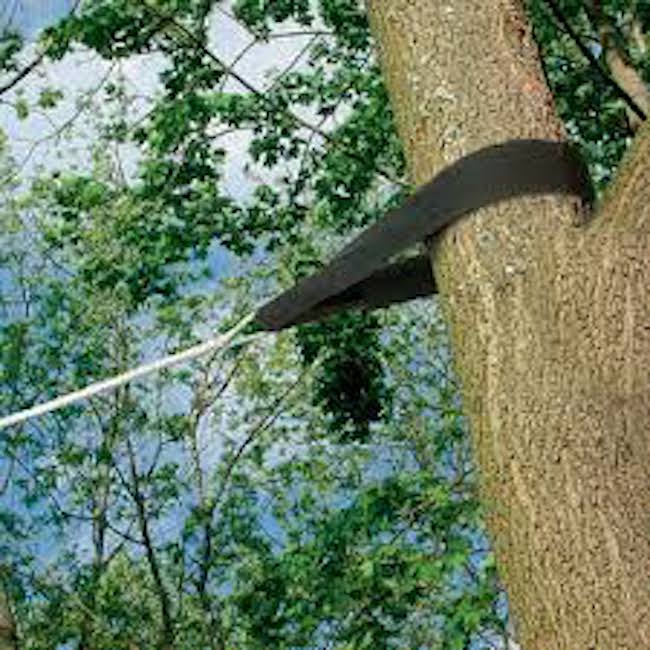
Dynamic systems usually apply to the crown of the tree (its upper branches and leaves). Ropes are affixed between branches or small trunks using nylon straps that do not damage the tree. The nylon straps give the tree branches more room to move and reshape themselves more naturally.
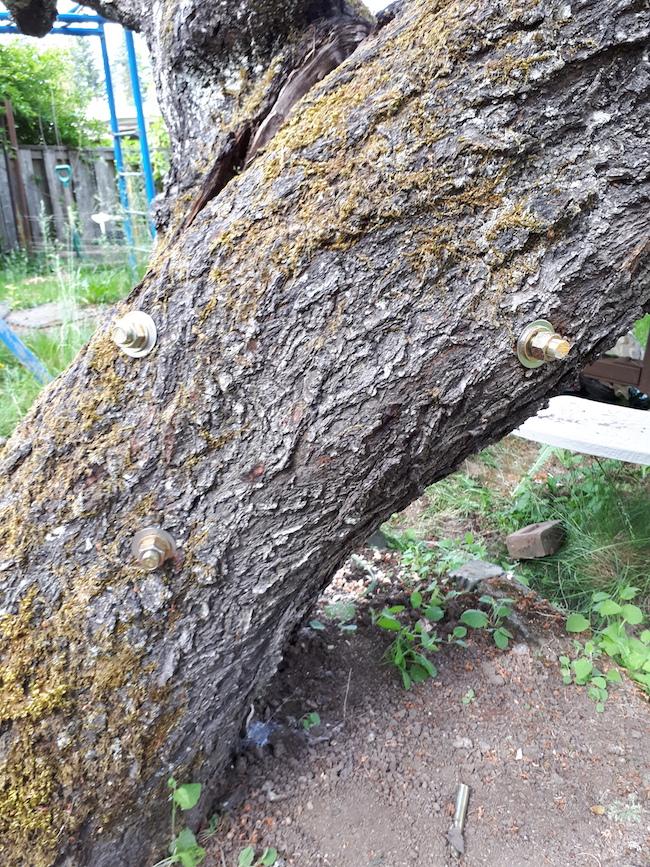
Static systems primarily use cables or braces (rods) that are bolted through the tree trunk or branches. These rods are more rigid than the nylon straps that dynamic support provides. This provides more security, and prevents the movement that dynamic systems allow.
The method chosen normally depends on a variety of circumstances and conditions at the tree.
If you’d like an arborist to look at your trees or site in the Saanich and Victoria area, please give us a call at (250) 888-9222 or use the request form on our Get a Quote page and we’ll get right back to you.
Photos of hands-on work below are from Oakstead's earlier field work, from before it focused on consulting.
Cabling and Bracing: frequently asked questions
What is the difference between static and dynamic tree cabling?
Dynamic systems usually go in the crown and connect branches or small trunks with ropes and nylon straps, letting limbs move and reshape naturally. Static systems use cables or rods bolted through the trunk or branches, giving more rigid security and preventing that movement.
When does a tree need cabling or bracing?
Support may help a mature tree with storm damage, vehicle damage, a weak union or an awkward lean, as long as its condition is not too far advanced. Without support, weak limbs can fail and damage landscaping or property. An arborist assesses whether support is appropriate.
Does cabling hurt the tree?
Dynamic systems attach with nylon straps that do not damage the tree. Static systems are bolted through wood, which is more invasive but gives more rigid support. Oakstead chooses the method based on the tree's condition and site, and assesses the tree before any system is installed by vetted local partners.
Do tree support systems need maintenance?
Yes. As a tree grows, straps, cables and rods should be inspected periodically and adjusted or replaced when needed, so the system keeps doing its job without restricting the tree. Ask Oakstead about follow-up checks when your system is installed.
Ready to talk to a Certified Arborist?
We respond to every request. Serving the Saanich Peninsula, Greater Victoria and the Cowichan Valley.